Electric Fireplace Not Working? Fixes by Symptom
Most electric fireplace problems come down to a switch, a breaker, a setting or a tripped overheat cutoff. Work through these fixes by symptom, try the 10-minute reset, and know when to stop and call support.
 The Fireplace Co. team
Updated November 12, 2026
8 min read
In this guide 11 sections
- Safety first
- Symptom, cause and fix at a glance
- How to reset an electric fireplace
- Electric fireplace won't turn on
- Flame works but no heat, or it's blowing cold air
- No flame, or the flame isn't moving
- Remote not working
- Fireplace keeps tripping the breaker
- What do E1, E2 and E3 error codes mean?
- When to stop and contact support
- FAQ
Below you’ll find fixes grouped by symptom, a reset routine that works on most brands, what error codes like E1, E2 and E3 usually mean, and the signs that tell you to stop and call for help instead of fiddling further.
Safety first
Before you open any panel, unplug the fireplace or switch off its breaker if it’s hardwired. Let it cool for at least 10 minutes if the heater was running. Don’t remove the back cover or work on internal wiring. That puts you within reach of live parts and can affect warranty coverage. Everything in this guide can be done from the outside of the unit.
Symptom, cause and fix at a glance
| Symptom | Likely cause | What to try |
|---|---|---|
| Won’t turn on at all | Main switch off, dead outlet, tripped breaker or GFCI | Flip main switch to on, test outlet with a lamp, reset breaker or GFCI |
| Flame on, no heat | Heat not selected, thermostat set too low, overheat cutoff tripped | Press heat, raise setpoint, unplug 5 to 10 minutes and clear vents |
| Blowing cold air | Thermostat satisfied, normal cool-down, failed heating element | Raise setpoint; if still cold on high, contact support |
| No flame or dim flame | Brightness turned down, flame mode off, failed LED or bulb | Raise brightness, cycle flame button; replace bulbs on bulb models |
| Flame not moving | Flame speed setting, stuck flame rod motor (older units) | Check settings; on rod models, contact support about the motor |
| Remote not working | Batteries, main switch off, lost pairing, blocked receiver | New batteries, main switch on, re-pair per manual |
| Trips the breaker | Shared or overloaded circuit, extension cord, internal fault | Move to a less loaded circuit, plug directly into wall |
| Clicking | Thermostat relay cycling, metal expanding as it warms | Normal; no action unless it’s constant or loud |
| Grinding, rattling, squealing | Dusty or failing fan, worn flame motor | Unplug and vacuum the vents; if it persists, contact support |
| Error code (E1, E2, E3…) | Usually overheat or a temperature sensor fault | Reset, clear vents, check manual for your model’s code list |
How to reset an electric fireplace
This routine clears most temporary faults, including a tripped overheat cutoff, a frozen control board and a remote that’s lost its link:
- Turn the unit off with the remote or control panel.
- Flip the main power switch to off. It’s usually a rocker switch behind a small panel or on the side or back of the unit.
- Unplug it, or switch off the breaker for a hardwired unit.
- Wait 5 to 10 minutes. This lets the thermal cutoff cool and reset and drains the control board. If it overheated, give it 30 minutes.
- While you wait, vacuum the heater intake and outlet grilles with a brush attachment and make sure nothing is blocking them.
- Plug back in, flip the main switch on, then press power.
Some models also have a dedicated reset button, often near the main switch or on the control board behind the lower panel. Your manual will say if yours does.
Electric fireplace won’t turn on
No lights, no beep, nothing. Work from the wall inward:
- Test the outlet with a lamp or phone charger. If it’s dead, check the breaker panel for a switch sitting in the middle position, and look for a GFCI outlet (the kind with test and reset buttons) that may have tripped somewhere on the same circuit, often in a bathroom, kitchen or garage.
- Check the main power switch. The remote and control panel can’t wake the unit while it’s off. This is the most common “it’s broken” call that turns out to be nothing.
- Lose the extension cord. Plug directly into the wall. The U.S. Fire Administration’s heating fire safety guidance says to plug heaters straight into an outlet, never into an extension cord or power strip, and a thin cord can also starve the unit of power.
- Look at the cord and plug. Any scorching, melting or a plug that feels hot means stop using it.
Still dead after a reset? If you just set it up, our guide on how to turn on an electric fireplace covers the switch locations that trip people up.
Flame works but no heat, or it’s blowing cold air
This is the most searched electric fireplace problem, and it’s usually a setting.
- Heat isn’t on. Flame and heat are separate. Press the heat button and look for the heater indicator.
- Thermostat is satisfied. If the setpoint is at or below room temperature, the fan may run while the element stays off, which feels like cold air. Raise it 5 degrees and listen for a click.
- Cool-down cycle. After you turn off the heat, many units blow unheated air for a minute or two. That’s normal.
- Overheat protection tripped. Blocked vents, a unit pushed too close to a wall or a blanket over the grille can trip it. Do the reset above and give it 30 minutes.
- Failed element or heater fuse. If the fan runs on high, the setpoint is well above room temperature, and the air is still cold after a reset, the element or an internal thermal fuse has likely failed. That’s a parts job for the manufacturer.
Also keep expectations in line. A 1,500 W plug-in heater puts out about 5,100 BTU, which is supplemental heat for one room, not a furnace. Warm, not hot, air is normal. More in do electric fireplaces give off heat.
No flame, or the flame isn’t moving
No flame: turn the flame brightness all the way up and cycle the flame button. Some units have a flame-off setting that looks like a fault. On older models with incandescent bulbs, a burned-out bulb is the usual culprit; the manual shows how to reach them, typically from the top or back. LED models rarely lose all their LEDs at once, so a completely dark LED flame usually points to a control board or power issue.
Flame not moving: many LED units have a flame speed setting, so check that first. Older and budget models make the flicker with a rotating rod covered in reflective strips, driven by a small motor. If that motor stalls, the flame freezes in place, and you may hear a hum or squeak. Gently nudging the rod sometimes frees it, but a seized motor needs replacing.
Remote not working
- Replace the batteries, even if they’re new-ish.
- Make sure the main power switch is on.
- Stand in front of the unit with a clear line of sight. Infrared remotes need it.
- Re-pair the remote. Many fireplaces learn a remote when you hold a button during power-up; the steps vary, so follow your manual.
- Try the control panel. If the panel works and the remote doesn’t, the problem is the remote or the receiver, not the fireplace.
Fireplace keeps tripping the breaker
A 1,500 W heater draws about 12.5 amps at 120 volts. A standard 15 amp household circuit can carry that, but not with much else. Add a TV, a game console and a lamp on the same circuit, and the breaker trips when the heater kicks on high.
- Run it on low heat (about 750 W) and see if the trips stop.
- Move the fireplace or the other loads to a different circuit.
- For a permanent fix, have an electrician add a dedicated 20 amp circuit, especially for a recessed or media-console unit you won’t be moving.
If it trips the breaker instantly, even with nothing else on the circuit and the heater off, stop using it. That points to an internal short.
What do E1, E2 and E3 error codes mean?
Error codes are model-specific. The same code can mean different things on different brands, so check the code table in your manual. That said, on many electric fireplaces the low-numbered codes point to one of two things:
- Overheat. The unit detected high internal temperature and shut the heater down. Clear the vents, reset, and give it time to cool.
- Temperature sensor fault. The sensor that reads room temperature is open, shorted or unplugged. A reset sometimes clears a one-off glitch. If the code returns right away, the sensor or board needs service.
Don’t keep resetting a code that comes straight back. Write it down and contact support.
When to stop and contact support
Unplug the fireplace and leave it off if you notice any of these:
- A burning plastic or electrical smell (beyond the brief first-use smell)
- Smoke, sparks, scorch marks or a melted plug
- The breaker trips immediately on an empty circuit
- An error code returns right after every reset
- Grinding or loud rattling from the fan that cleaning doesn’t fix
- A cracked glass front
Have the brand, model number (on a label on the back or inside the firebox) and a short video of the problem ready. If you bought the fireplace from us, contact us with those details and we’ll help you work through it or connect you with the manufacturer’s support. If it’s time for a replacement, our electric fireplace inserts slide into existing openings without any venting.
FAQ
How do you reset an electric fireplace?
Turn it off, flip the main power switch off, unplug it, and wait 5 to 10 minutes (30 if it overheated). Clean the vents while you wait, then plug in, switch on and press power. Some models also have a reset button near the main switch.
Is there a fuse in an electric fireplace?
Many have a thermal cutoff or thermal fuse that protects the heater. A resettable cutoff recovers after the unit cools. A one-time thermal fuse that has blown has to be replaced, which is a job for the manufacturer’s service team rather than a DIY fix.
Why is my electric fireplace blowing cold air?
Usually the thermostat setpoint is at or below room temperature, so the fan runs with the element off, or the unit is in its cool-down cycle after you switched off the heat. If it blows cold on high with the setpoint raised, the heating element or its fuse has likely failed.
How do I fix an E3 error on an electric fireplace?
Reset the unit, clear anything blocking the vents and let it cool for 30 minutes. On many models, E-codes like E3 indicate overheating or a temperature sensor fault, but meanings vary by brand. If the code returns, check your manual’s code table and contact support.
How many years does an electric fireplace last?
With basic care, many electric fireplaces last a decade or more. LED flame lights are long-lived, while older bulb models need bulb changes. Heater fans last longest when you vacuum the vents each season.
Shop the guide
All electric fireplaces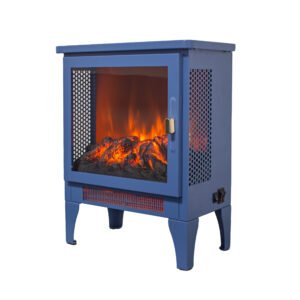


We write our guides from manufacturer specs and published safety standards, and update them when specs change. Spotted something out of date, or need help with your room? Ask us.