Does an Electric Fireplace Need a Vent? No, and Here’s Why
Electric fireplaces don't need a vent or chimney because nothing burns: no smoke, no carbon monoxide, no exhaust. Here's where you can put one, the exceptions for water-vapor and hardwired models, why inserts still need the damper closed, and what renters should check.
 The Fireplace Co. team
Updated November 12, 2026
6 min read
In this guide 7 sections
That’s the main reason people pick electric in the first place. No chimney sweep, no gas line, no hole through the roof. There are a few real exceptions and some persistent myths, though, so here’s the full picture.
Why there’s nothing to vent
A chimney or vent pipe exists to carry away what burning fuel leaves behind: smoke, carbon monoxide, carbon dioxide and water vapor. Wood makes all of that. So does gas, even when it burns cleanly.
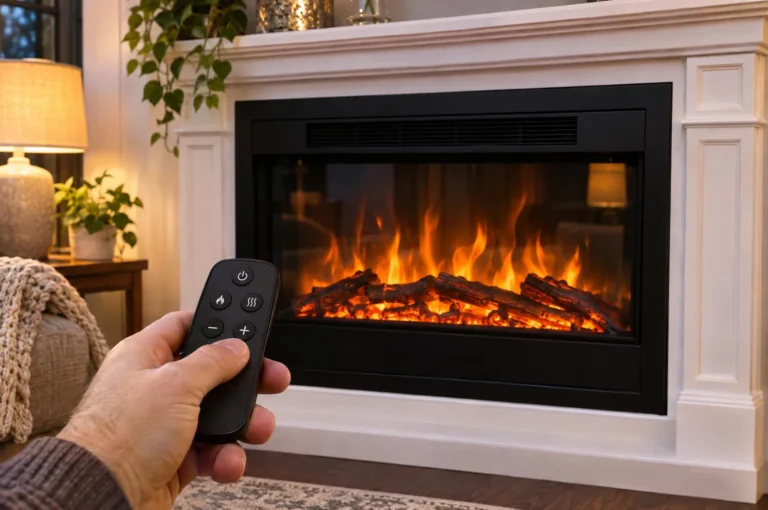
An electric fireplace doesn’t burn anything. The flame you see is LED light projected onto a screen or reflectors. The heat comes from an electric element and a small fan, the same basic setup as a space heater. Electricity in, light and warm air out. There’s no exhaust to send anywhere.
That’s why the spec sheets on our 42-inch recessed wall fireplace and similar wall units list the venting as “vent free.” It’s not a special feature. There’s simply nothing to vent.
| Wood-burning | Vented gas | Vent-free gas | Electric | |
|---|---|---|---|---|
| Burns fuel | Yes | Yes | Yes | No |
| Needs a chimney or vent pipe | Yes, a chimney | Yes, a flue or direct-vent pipe through a wall or roof | No, exhaust stays in the room | No |
| Combustion byproducts in your home | Possible with poor draft | Sent outside | Water vapor, carbon dioxide and small amounts of carbon monoxide | None |
| What you need to install it | Masonry or factory chimney | Gas line and venting | Gas line; some local codes restrict them | A wall outlet (or an electrician for hardwired models) |
If you’re weighing all the options, our gas vs electric fireplace guide compares costs, heat and installation side by side.
The vents you do see, and why you shouldn’t cover them
Look closely at most electric fireplaces and you’ll find grilles above, below or beside the firebox. Those aren’t exhaust vents. They’re the air intake and heat outlet for the built-in fan heater. Room air goes in one side, passes over the element and comes back out warm.
They still need room to breathe. Blocking them makes the heater work harder and can trip the overheat cutoff. Keep decor, speakers and baskets out of the way. Keep about three feet clear in front of the heat outlet. For recessed and built-in units, follow the framing and clearance dimensions in the installation manual exactly.
Where you can put one
Because there’s no flue, placement comes down to three things: a nearby outlet, a wall or floor that can hold the unit, and enough clearance. That opens up spots a wood or gas fireplace could never go.
- Under the TV. A fireplace TV stand puts the firebox in the media console. Most living rooms already have an outlet behind the TV.
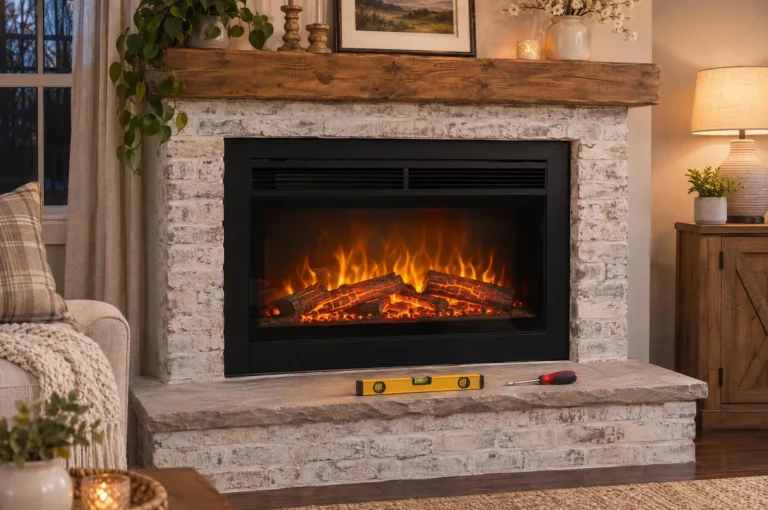
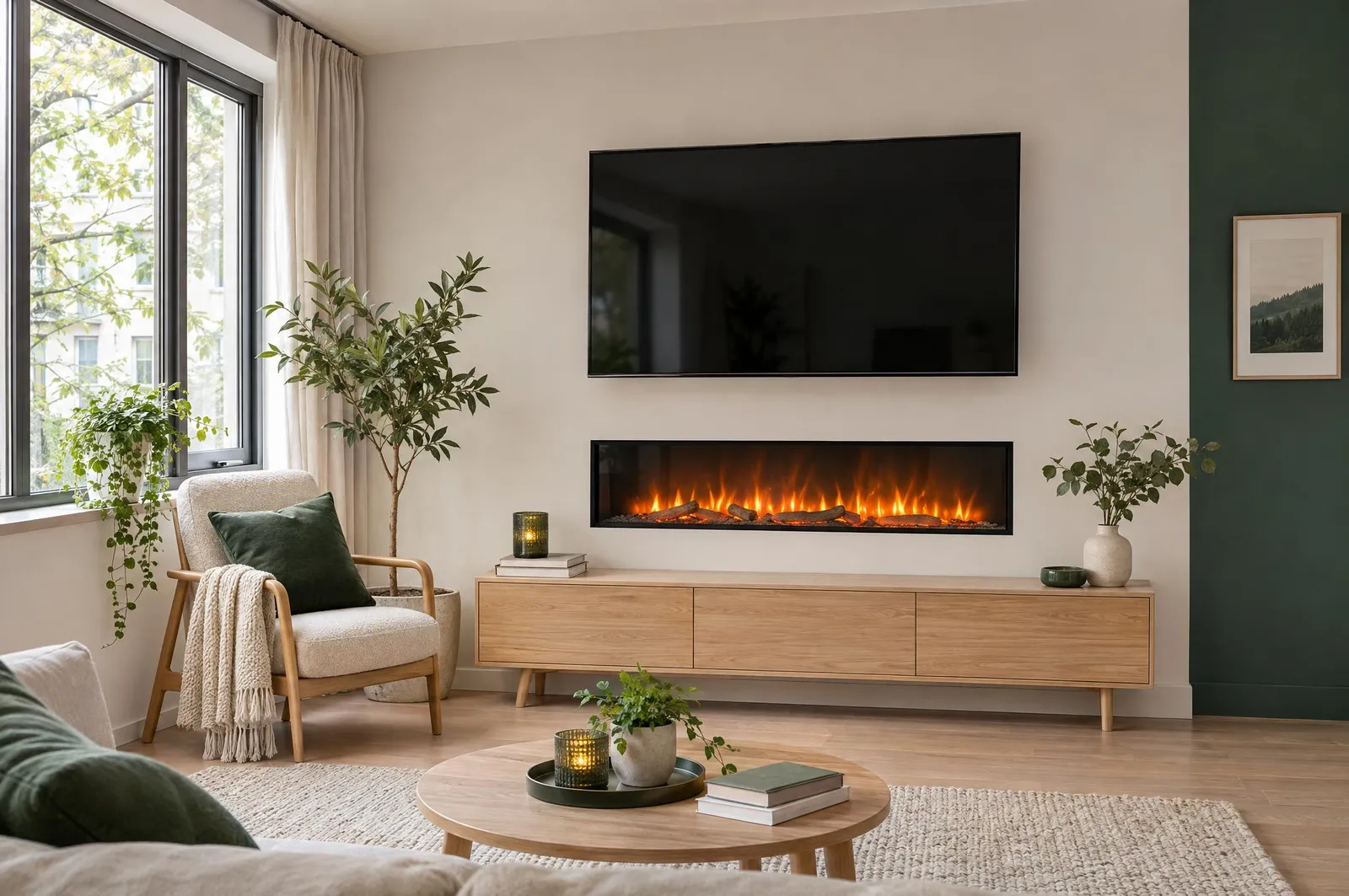
- On or in a wall. Wall-mounted and recessed electric fireplaces hang like a TV or sit inside a framed opening, with no chimney chase.
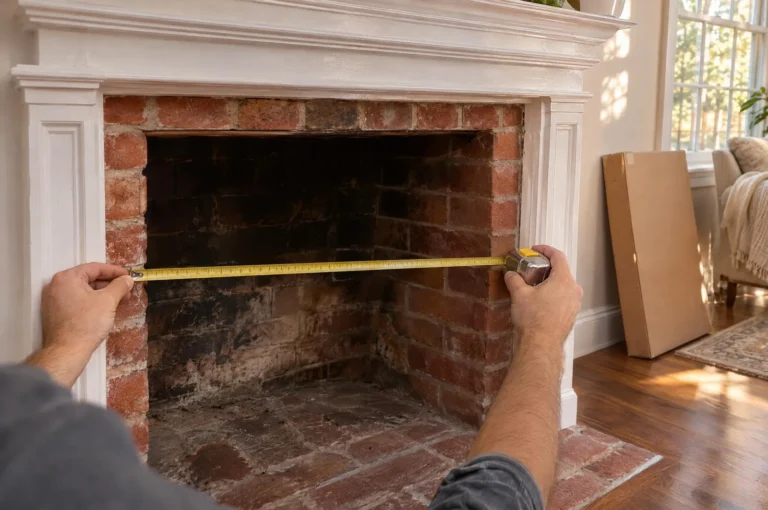
- In an old fireplace. An insert slides into an existing masonry firebox and turns a drafty, unused hearth into something you’ll actually switch on.
- Bedrooms, basements and home offices. Any dry indoor room with an outlet works.
Where not to put one: bathrooms, other wet areas and outdoors, unless the unit is specifically rated for it. Some manuals say this outright. Check yours.
Exceptions and fine print
Water-vapor (mist) fireplaces. Some electric fireplaces create their flame effect with a fine water mist lit by LEDs. They still don’t need a vent, but they do need a water reservoir that you refill and clean regularly. The manual usually specifies what kind of water to use, often distilled to limit mineral buildup.
Hardwired models. Some built-in and larger wall units are designed to connect directly to a circuit instead of plugging in. That’s an electrician’s job, and your area may require a permit. Still no vent. Some units give you the choice. The manufacturer of our 65-inch fireplace TV stand lists both a standard plug-in cord and a hardwired installation option.
Inserts in an existing chimney. The insert doesn’t need the chimney, but the chimney still affects the room. An open flue pulls warm air up and out and lets cold drafts down. Close the damper before you slide the insert in. If there’s no working damper, a removable chimney balloon or flue plug does the same job. You’ll also need a way to reach an outlet; some homeowners have an electrician add one near or inside the firebox. Our insert installation guide covers both steps.
The circuit. With the heater on high, a 1,500 W fireplace draws 12.5 amps (1,500 ÷ 120). Plug it directly into a wall outlet. The CPSC’s space heater guidance says never to use an extension cord or power strip, and ideally the fireplace shouldn’t share a circuit with other heavy loads.
Condensation, moisture and air quality myths
“Electric fireplaces cause condensation and mold.” They don’t add moisture. Window condensation happens when humid indoor air meets cold glass. Burning gas indoors without a vent adds water vapor to the room; electric heat doesn’t. Water-vapor models add a small amount of mist to the firebox, but they’re not humidifiers.
“They dry out the air.” No heater removes water from the air. Warmer air simply has lower relative humidity, which happens with any heat source, including your furnace. A humidifier is the fix.
“They need fresh air because they use up oxygen.” Burning consumes oxygen. An electric element doesn’t. You don’t need to crack a window.
“That smell means something is wrong.” A faint smell the first few times the heater runs is common as dust and manufacturing residue burn off the element, and you’ll often notice it again after the unit sits unused all summer. It should fade within a few uses. A strong or lasting burning-plastic smell is different: turn it off, unplug it and contact the seller or manufacturer.
Renting or living in an apartment
Electric is usually the only realistic fireplace option for renters, and a good one. A plug-in unit doesn’t alter the building, so you can take it with you when you move.
A few things to check first:
- Your lease. Some leases and buildings restrict space heaters. Read the clause or ask.
- Wall work. Recessing a unit into a wall or hardwiring it needs your landlord’s written OK. A TV stand, mantel unit or freestanding stove needs nothing but an outlet.
- Older wiring. Older apartments often have fewer circuits. If the breaker trips when the heater and the TV run together, move the fireplace to a different outlet on another circuit, never onto an extension cord.
FAQ
Do electric fireplace inserts need to be vented?
No. An electric insert burns nothing, so it needs no vent or flue, even when it sits inside an old wood-burning fireplace. Close the damper or plug the flue anyway, so warm room air doesn’t escape up the chimney.
Do you need a chimney for an electric fireplace?
No. Electric fireplaces work in rooms with no chimney at all. That’s why you can mount one on a wall, build one into a TV stand or put one in a bedroom or basement.
Can you plug an electric fireplace into a regular outlet?
Yes. Most plug-in electric fireplaces run on a standard 120 V household outlet and draw up to about 12.5 amps on high heat. Plug directly into the wall, and avoid sharing the circuit with other big loads. Hardwired models are the exception and need an electrician.
Can you have an electric fireplace in an apartment?
Usually, yes. Plug-in models need only an outlet and don’t change the building. Check your lease for any space heater rules, and get the landlord’s permission before recessing or hardwiring a unit.
Does the chimney have to be closed off when installing an electric insert?
It isn’t required for the insert to work, but it’s a good idea. An open flue lets heat escape and drafts come in. Close the damper, or use a chimney balloon or flue plug if the damper is missing or broken.
Shop the guide
All electric fireplaces


We write our guides from manufacturer specs and published safety standards, and update them when specs change. Spotted something out of date, or need help with your room? Ask us.