Can You Leave an Electric Fireplace On All Night? Safety Rules
Turn the heater off when you go to bed: that's the CPSC and NFPA advice for space heaters, and an electric fireplace's heater is one. Flame-only mode is a different story. Here's how to use timers, clearances and the wall-outlet rule to stay warm and safe.
 The Fireplace Co. team
Updated November 12, 2026
7 min read

In this guide 8 sections
- The rule from the safety agencies: heat off when you sleep or leave
- Heat mode vs flame-only overnight
- Let the timer do the remembering
- What overheat protection does, and what it doesn't
- The outlet rule: wall outlet only, every time
- Clearances, smoke alarms, kids and pets
- A bedtime routine that works
- FAQ
We sell electric fireplaces, so we’d love to tell you to run them around the clock. We won’t. The heater inside a fireplace TV stand or wall unit is the same 1,400 to 1,500 W class of heater as a portable space heater, and the safety advice for those applies. The good news is that a timer and a few habits get you a warm room at bedtime without leaving the heat on unattended.
The rule from the safety agencies: heat off when you sleep or leave
The CPSC’s January 2026 winter safety release gives three plain instructions for electric space heaters: keep them at least three feet from drapes, furniture, bedding and other things that can burn; plug them directly into a wall outlet, never an extension cord or power strip; and turn them off when sleeping. The same release estimates that portable heaters were involved in an average of 1,600 fires a year from 2020 to 2022, with an average of 70 deaths and 150 injuries a year.
The NFPA’s home heating safety page says the same thing in different words: keep heaters three feet from anything that can burn, and turn portable heaters off when you leave the room or go to bed.
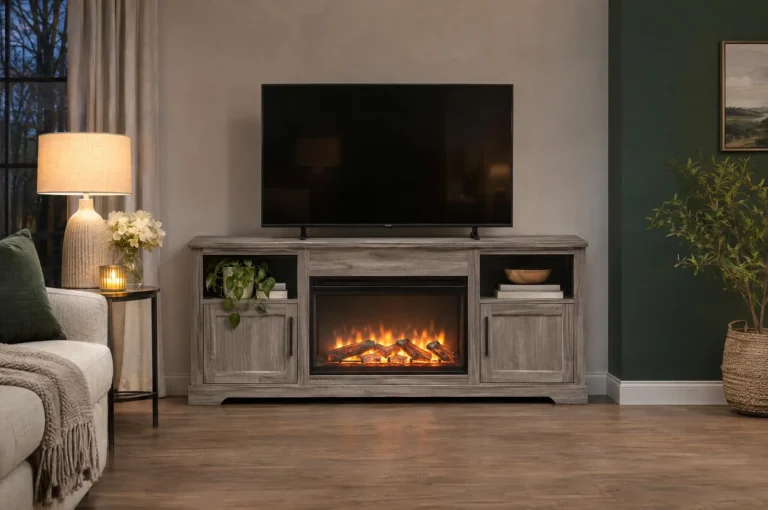
Is an electric fireplace really a “portable heater”? A plug-in insert, stove or TV stand fireplace runs a 120 V fan heater in the same wattage range, so treat it like one. Being built into nice furniture doesn’t change what the element is doing.
Heat mode vs flame-only overnight
The two modes are very different appliances in practice.
| Heater on (1,400 to 1,500 W) | Flame only (roughly 15 to 50 W) | |
|---|---|---|
| Heating element | Hot, with a fan blowing warm air | Off |
| Current draw at 120 V | about 11.7 to 12.5 amps | under half an amp |
| Cost for 8 hours at about 17¢/kWh | $1.90 (1,400 W) to $2.04 (1,500 W) | about 2 to 7¢ |
| CPSC and NFPA guidance | Turn heaters off when sleeping | Their heater tips don’t address LED-only operation; follow your manual |
| Our advice overnight | Use the timer so it shuts off after you fall asleep | Reasonable if the manual allows it and the outlet and cord are in good shape |
The math on that cost row: 1.5 kWh × 8 hours = 12 kWh × $0.17 = $2.04. For flame only, 15 to 50 W for 8 hours is 0.12 to 0.4 kWh, or about 2 to 7 cents. Our guide to how much electricity an electric fireplace uses has the full cost tables.
Even in flame-only mode, the plug, outlet and cord are still live. If anything about them seems off (more on that below), turn the unit off at night.
Let the timer do the remembering
Most people who ask this question really want one thing: a warm bedroom or living room while they fall asleep. A shut-off timer handles that without the heater running at 3 a.m.
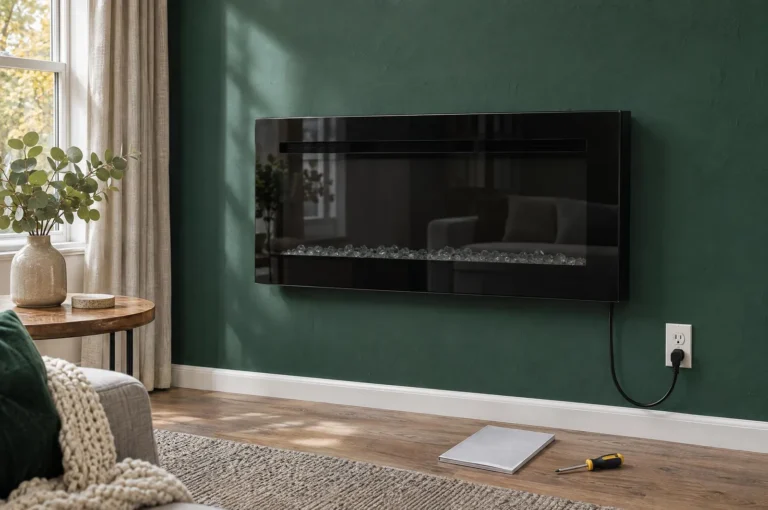
Many electric fireplaces have one built in. Our 33-inch electric fireplace insert lets you set it for 1 to 9 hours from the remote or the control panel. Set it for an hour or two at bedtime and the heater shuts itself off. Some smart models, like our 50-inch WiFi wall fireplace, can also be checked and switched off from a phone app, which is handy when you’re already in bed and can’t remember if you turned it off.
A thermostat is not the same thing as a timer. Many of our units let you set the room temperature from 64 to 82°F, and the heater cycles on and off to hold it. That saves power, but the heater is still operating while you sleep. It doesn’t change the advice.
What overheat protection does, and what it doesn’t
Most of the inserts and wall units we carry list two protections: an overheat sensor that cuts power when the internal temperature gets too high, and a fuse. Freestanding stoves often add a tip-over switch. Our compact fireplace stove, for instance, lists both tip-over and overheat protection.
Those are good backups. They trip when vents are blocked or the unit falls over. They do not notice a throw blanket that slid within a foot of the vent, a cord pinched under a dresser leg, or an outlet with worn contacts that’s heating up behind the furniture. That’s why the agencies still say to turn heaters off when you sleep, even though nearly all modern heaters have an auto shut-off.
Look for a safety listing mark too. The manufacturer lists CSA/UL certification for many of the inserts and wall units we carry, including the 33-inch insert and the 50-inch smart wall fireplace mentioned above. A listing means the design was tested to a safety standard. It’s not permission to skip the basics.
The outlet rule: wall outlet only, every time
At 12.5 amps for hours at a stretch, a 1,500 W heater asks a lot of a plug connection. Light-duty extension cords and power strips aren’t built for that kind of steady load, and the weak points are the connections, where heat builds up. So:
- Plug directly into a wall outlet. No extension cords, no power strips, no “heavy-duty” exceptions.
- Feel the plug after the heater has run for 30 minutes. Warm-to-the-touch plugs or outlet covers mean a loose or worn connection. Stop using that outlet and have an electrician look at it.
- Don’t run the cord under a rug or pinch it behind furniture.
- If possible, give the fireplace a circuit without other heavy loads on it. A breaker that trips every evening is telling you something.
Clearances, smoke alarms, kids and pets
Three feet in front of the heat vent. Curtains, sofa throws, dog beds, laundry baskets and stockings hung from the mantel are the usual offenders. During the holidays, check again after you decorate.
Stoves on hard, level floors. Some freestanding models say not to use them on rugs, carpet or vinyl. The stove linked above is one of them. Read your manual before you set one on carpet.
Smoke alarms that work. NFPA recommends smoke alarms inside each bedroom, outside each sleeping area and on every level of the home, tested monthly. If the fireplace is in a bedroom, that alarm matters most.
Kids. The glass on most electric fireplaces stays cool or just warm, but the air from the vent is hot. Keep the remote out of reach, and if your model has a child lock, turn it on.
Pets. Cats like to sleep on warm things, including the top of a stove near the outlet. Dogs chew cords. Keep pet beds out of the three-foot zone and route the cord where it can’t be reached.
A bedtime routine that works
- Run the heater in the evening while you’re up and in the room.
- At bedtime, set the shut-off timer for 1 or 2 hours, or switch the heat off and leave just the flame if your manual allows it.
- Glance at the three-foot zone in front of the vent before you turn in.
- If you’re leaving the house, turn the whole unit off.
If your unit shuts itself off unexpectedly or trips a breaker, that’s worth a look before you use it again. Our troubleshooting guide covers the common causes.
FAQ
Are electric fireplaces safe?
Used as directed, they’re among the safer ways to get a fireplace look: no open flame, no combustion and no carbon monoxide. The real risks come from the heater: things that can burn too close to the vent, extension cords or power strips, and leaving the heat running unattended. Follow the manual and the CPSC’s space heater rules.
How long can you leave an electric fireplace on?
There’s no single hour limit across brands. Your manual is the authority. For the heater, the practical limit is simple: run it while someone is awake and in the home, and turn it off or let the timer shut it off when you go to bed or leave.
Is it OK to leave an electric fireplace on overnight in flame-only mode?
Flame-only mode draws roughly 15 to 50 W with no heating element running, so it’s a much lower risk than running the heater. Check that your manual doesn’t say otherwise, and only do it if the cord, plug and outlet are in good condition.
Can you put an electric fireplace on carpet?
It depends on the model. Some freestanding stoves specifically say not to use them on rugs, carpet or vinyl flooring. Fireplace TV stands and mantel units sit on the floor like furniture, but check the manual for any flooring or clearance notes on your unit.
Can you plug an electric fireplace into an extension cord?
No. The CPSC says to plug electric space heaters directly into a wall outlet, never an extension cord or power strip. At 12.5 amps for hours at a time, the cord and its connections can overheat.
Can an electric fireplace cause a fire?
Any heater can if it’s misused. With an electric fireplace, the usual causes are flammable items too close to the heat vent and overloaded cords or outlets. Keep the three-foot zone clear, use a wall outlet, and turn the heat off when you sleep.
Shop the guide
All electric fireplaces


We write our guides from manufacturer specs and published safety standards, and update them when specs change. Spotted something out of date, or need help with your room? Ask us.