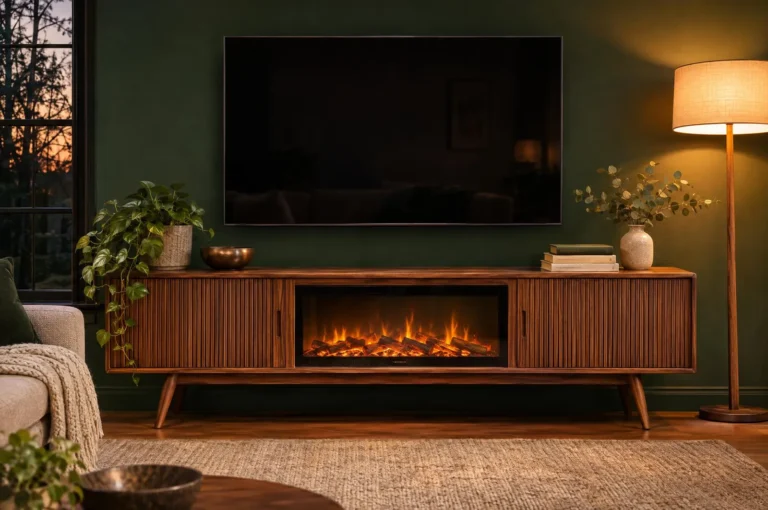
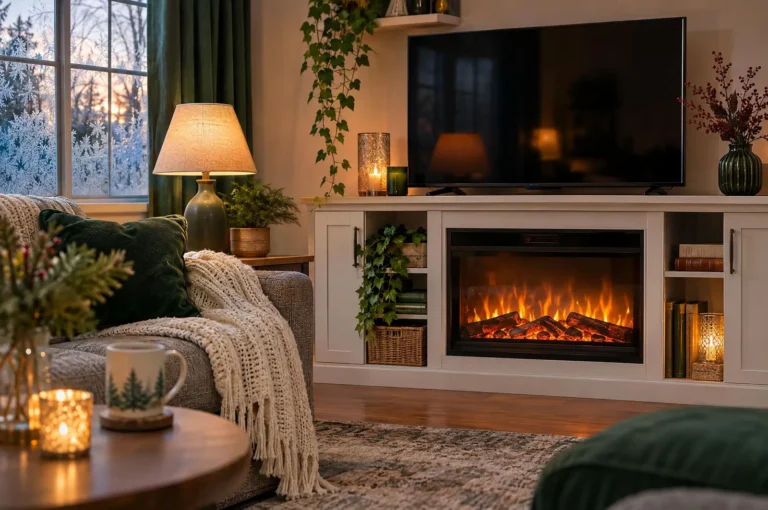
How Does an Electric Fireplace Work? Flame, Heat and Power Explained
The flame is light and the heat comes from a separate heater. Here is how each part works, what it costs to run, and whether an electric fireplace is worth it for you.
 The Fireplace Co. team
Updated November 14, 2026
4 min read
In this guide 7 sections
How the flame works
There is no fire. The “flame” is light, created in a few common ways:
- LEDs and a flicker rod. LEDs shine onto a slowly turning rod with reflective strips. The moving light bounces off a screen to look like flickering flames.
- Layered screens. Several panels at different depths make the flame look three-dimensional.
- Log sets and ember beds. Resin logs and a glowing ember bed sit in front, lit from below. On some of our inserts, such as the 33″ log-set insert, the ember glow runs on its own.
- Color and brightness controls. Many models let you change the flame color and brightness from the remote.
Want the most convincing look? See our most realistic electric fireplaces.
How the heat works
The heater is separate from the flame. Most use one of two types:
| Heater type | How it works | What it feels like |
|---|---|---|
| Fan-forced coil | A fan blows air over a hot coil and out of a vent | Warms the air in the room |
| Infrared quartz | A quartz element gives off infrared warmth, helped by a fan | Warms you and surfaces directly |
Either way, plug-in models top out around 1,400 to 1,500 W, about 4,800 to 5,100 BTU, because that is what a standard 120 V outlet can safely supply. Makers usually rate them for supplemental heat in a room of up to 400 sq ft. Browse infrared electric fireplaces or read how much heat they give.
Power, controls and installation
Most electric fireplaces plug into an ordinary 120 V wall outlet. Some larger built-in units are hardwired, which is a job for an electrician. Controls usually include a remote, a thermostat (often 64 to 82°F), a timer and, on smart models like the 50″ Wi-Fi fireplace, an app and Alexa.
No chimney, vent or gas line is needed, because nothing burns. That is why they can go under a TV, on a wall or in an old fireplace. More in does an electric fireplace need a vent.
What it costs to run
At about 17 cents per kWh:
- Heater on high (1,500 W): about 26 cents an hour.
- Heater on high (1,400 W): about 24 cents an hour.
- Flame only: a few cents an hour or less, depending on the model.
Our running-cost guide has a full table.
Are electric fireplaces worth it?
They are worth it if you want:
- A fireplace look without a chimney, gas line or remodel.
- Supplemental heat in the room you use most, so you can turn the thermostat down elsewhere.
- A flame you can run all year, with the heat off in summer.
- No ash, no smoke and no chimney sweeping.
They are not the right choice if you want to heat a whole house or you love the smell and crackle of real wood. Our gas vs electric comparison helps if you are deciding between fuels.
Types of electric fireplace
- Fireplace TV stands: a media console with a fireplace in the middle.
- Inserts: a firebox for an existing fireplace, a mantel or a cabinet.
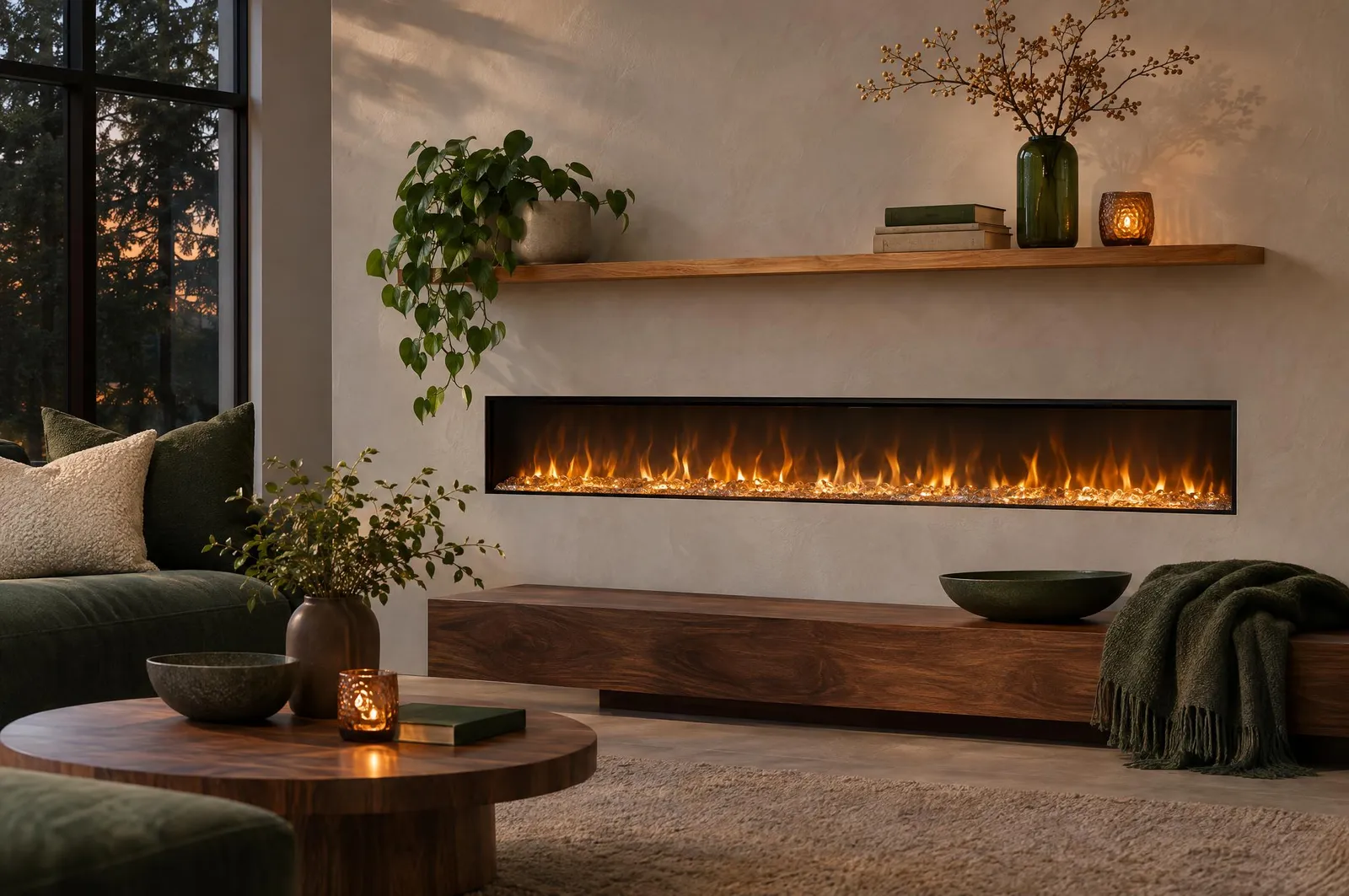
- Wall-mounted and recessed: long linear flames on or in the wall.
- With mantel: a freestanding surround that plugs in.
- Stoves and heaters: freestanding stove-style units.
FAQ
Do electric fireplaces have real flames?
No. The flame is made with LED light, reflectors and screens, so it never gets hot and cannot burn anything.
Can you run an electric fireplace without heat?
Yes. On nearly every model the flame runs with the heater off, using very little power.
Do electric fireplaces need to be plugged in?
Yes. Most plug into a standard 120 V outlet; some built-in models are hardwired. Plug straight into the wall, never into an extension cord.
How long do electric fireplaces last?
With no combustion, there is little to wear out. LEDs last for many years; the heater fan and controls are the parts most likely to need attention. Keeping the vents clean helps.
Can an electric fireplace heat a whole house?
No. A plug-in unit adds supplemental heat to one room, usually up to about 400 sq ft.
Shop the guide
All electric fireplaces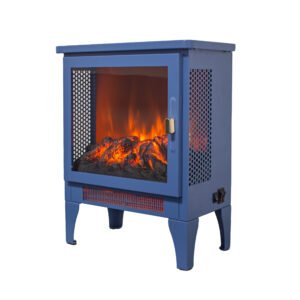


We write our guides from manufacturer specs and published safety standards, and update them when specs change. Spotted something out of date, or need help with your room? Ask us.